 Broadly speaking, every gentleman has perhaps struggled with some form of insecurity at a particular juncture in life. And I am certainly not a beneficiary of any special exclusions. To be sure, I am not immune to episodes of uneasiness and internal distress with what I perceive as personal character flaws. I put forth the best effort to manage and suppress feelings of uncertainty and dissatisfaction; sometimes with success and other times falling short. In many ways, writing is very therapeutic, and it is always my hope that my musings serve as encouragement and empowerment to readers. A circumstance this week prompted some self-reflection regarding certain insecurities that are a source of a long-standing internal battle. This is going to sound odd, but I struggle with being a nice guy. I understand that may seem strange, but allow me to explain further in detail.
If I may make the assumption, I am quite confident that my family, friends, and associates would describe me as a nice guy. And in many instances, that designation would be a compliment. I consider myself respectful, pleasant, courteous, and kind. These should be considered noble traits. However, being classified as a nice guy also has a negative connotation. In addition to the aforementioned characteristics, I can also be described as a guy that is soft-spoken, quiet, and non-confrontational. All things combined, well, now the moniker of being a nice guy takes a turn for the worse. When some individuals have referred to me as a “nice guy”, I am intelligent enough to decipher the context. Weak. Passive. Soft. When I became a supervisor, there wasn’t a question of knowledge or work ethic, but some individuals questioned whether I possessed people management skills necessary to lead a team. After all, I was a nice guy, and nice guys are pushovers.
The prevailing and misguided philosophy regarding management is one has to lead with bluster, aggression, and micromanagement. Colleagues disdain those types of leaders, yet subconsciously, people tend to believe those traits get the job done – for better or for worse. This typifies toxic leadership, so it is usually worse. Now, those adjectives don’t describe my personality, as I am a laid-back and easy-going individual. Now what occurred recently (centered around a work issue) was a subtle implication that my nice personality prevented me from making hard decisions, especially when friends within the department are involved. Admittedly, this tapped into my insecurity of being perceived as the “nice guy”. In other words: passive, soft, hesitant, and weak. I am fully aware of the perceptions, and I would not be truthful if I were to say the perceptions didn’t irritate me and cause some second-guessing of my work skills.
However, you might find it interesting to know that perception does not necessarily align with reality. The reality is that amongst management, I am one of few with the most corrective actions, and unfortunately, I have had to separate a colleague from the company. This belies the perception of being a pushover, as theoretically I should not be able to address difficult colleagues or situations. Trust me as I tell you that my initial years being a supervisor were wrought with challenges that I never envisioned – it was insanity. Nevertheless, I was able to navigate the most problematic circumstances and colleagues, yet the perception of being a nice guy remained unchanged. How?
The label bothers me, regardless of the facts, and I even contemplate adopting a harder edge from time to time. I eventually regain my senses and dispel the silly idea. I cannot betray my character and integrity. And I suppose that it is a testimony to my leadership style that I have been able to deliver some unsavory actions, yet my name and reputation remain unsullied. I’ll probably continue to struggle with the nice guy moniker, going back and forth within myself in search of an imaginary solution. Nevertheless, if you find yourself in the same boat as me, here are a few tips to help you navigate rough waters and stay true to yourself.
5 Effective Leadership Approaches For a Nice Guy
- A leader should never demean, disparage, or defame fellow colleagues. Good morale in the work environment is essential to the overall health and productivity of a business. If a leader is contributing to poor morale and a toxic work environment; that is definitely an issue. I ensure that treat every colleague with decency and dignity – even when delivering hard truths regarding work performance or behavior.
- A leader must ensure that his or her management style is guided by company policies and regulations. I am confident in my decision-making because it is supported by company protocol. I make sure I am familiar with pertinent documentation offered up by human resources, and I seek clarity when it is necessary. Any accusations of shenanigans on my behalf will be hard to prove because I adhere strictly to company guidelines. Yes, I’m a square. But I don’t play favorites, as I am fair and just across the board.
- A leader must be transparent. I will never ambush a colleague. If there are foreseeable issues on the horizon, I try my best to speak with a colleague to avoid any corrective actions. Confrontation makes me uneasy, so I attempt to avoid it. I am always honest with colleagues. I do not tell them what they want to hear. I tell them what they need to hear – no matter how uncomfortable the conversation.
- Leaders must demonstrate follow through on their word. Declarations of punitive measures without the proper consequences are meaningless. No one will ever take you seriously because colleagues will conclude that you never enforce warnings. Trust, I still get butterflies in my stomach, but I cast away whatever emotional responses I have toward the situation, and address the issue (not the person) directly per company policy. Before a serious conversation, it is not unlike me to script out talking points the day before so I can stick to the subject and never stray off the designated topic. I maintain an even, measured tone and I keep the conversation streamlined to the subject at hand.
- A leader must be willing to help their fellow colleagues. I am a strong believer in the growth and development of their careers. It is not unusual for me to undertake the task of performing a corrective action, yet later assist that same colleague with a resume or interview preparation. I believe everyone should be treated justly and fairly regardless of previous work indiscretions.

 The knowledgeable gentleman comprehends that his image does not begin with how society views him. Rather, the gentleman’s image begins with how he sees himself. He alone determines and dictates the manner in which he is presented to the world. Now, the first few sentences of this post may sound familiar because I penned those words back in 2013 as I was creating my ongoing Standard posts. It amazes me as those words are still true today. Image does matter. Image is sometimes dictated by personal behavior and choices. Now, I wholeheartedly admit that although I identify mostly as a liberal, I still maintain moderate views. That being said, I believe that as a collective, we must champion a standard of self-respect, dignity, and class. This is not sanctimony. This is not respectability politics; it is just plain respectability for oneself. Now, it has been approximately 25 years since I graduated high school, and in just a little over two decades, the cultural shift in principles and decency has been dramatic.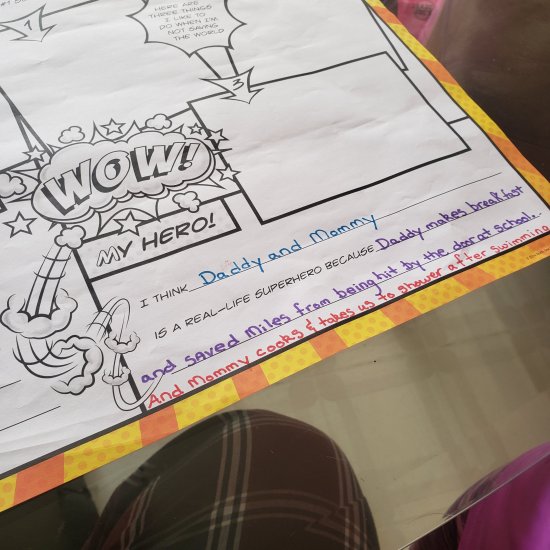
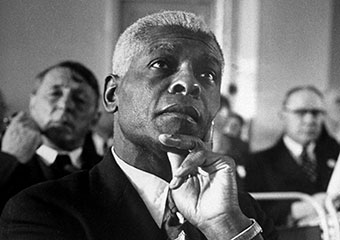
 If I have gleaned any knowledge working within the confines of the corporate world, it would definitely be understanding the necessity of having a strong network in my selected area of employment. Undoubtedly naive, my entry into the corporate environment commenced with an incorrect belief; a trust that hard work alone would translate to acknowledgment and then advancement. I was seriously mistaken. The knowledge and work performance a gentleman wields within the workplace are just as important as the
  To be sure, the thoughtful gentleman understands that every moment of significance carries meaning. Moments matter. This is especially true for the gentleman that has embarked upon the journey of fatherhood. Understandably, the journey is an arduous one, replete with important occasions that beg the focused attention and participation of a father. This is non-negotiable. Hopefully, this active role fosters an intimate relationship between father and child grounded in an appreciation and love exclusive to both involved parties. For example, approximately three years ago, my daughter was experiencing respiratory distress that prompted an expeditious visit to the emergency room. My wife needed to be home with our newborn son since, ironically, a hospital isn’t the best spot for a newborn outside of the initial birth. So I stayed with my daughter through a series of evaluations and treatments until she was discharged.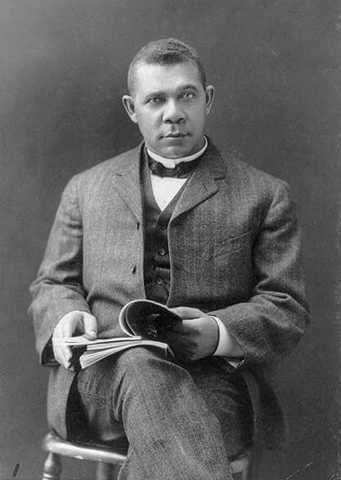
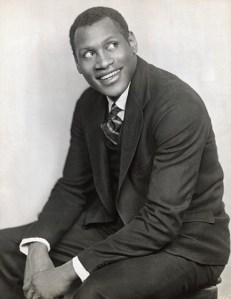 Sometimes, when sequestered within moments of quiet solitude, thoughtful ruminations reveal how incredibly fortunate I am. Fortunate, not in regards to monetary value, rather, fortunate in regards to the many blessings I have reaped tremendous benefit. Yes, I have been given much. Now, I understand that some individuals hold fast to the belief that they earn everything with no, if not minimal, assistance required. Well, sometimes success acts as a vanity whose reflection never grows tiresome to the person looking at it. Look, one cannot be merciless, yet expect mercy. One cannot embrace avarice, yet expect generosity. One cannot espouse hate, yet expect love.